

Ellen Langer’s famous 1979 aging study has been celebrated for decades as proof that the mind can reverse the body’s decline. A different reading of the same data suggests something more disturbing: that what looked like aging in those eight men may have been, at least partly, poisoning. Removing them from their homes for a week in a rural New Hampshire forest was the closest thing to a detox any of them had ever received.
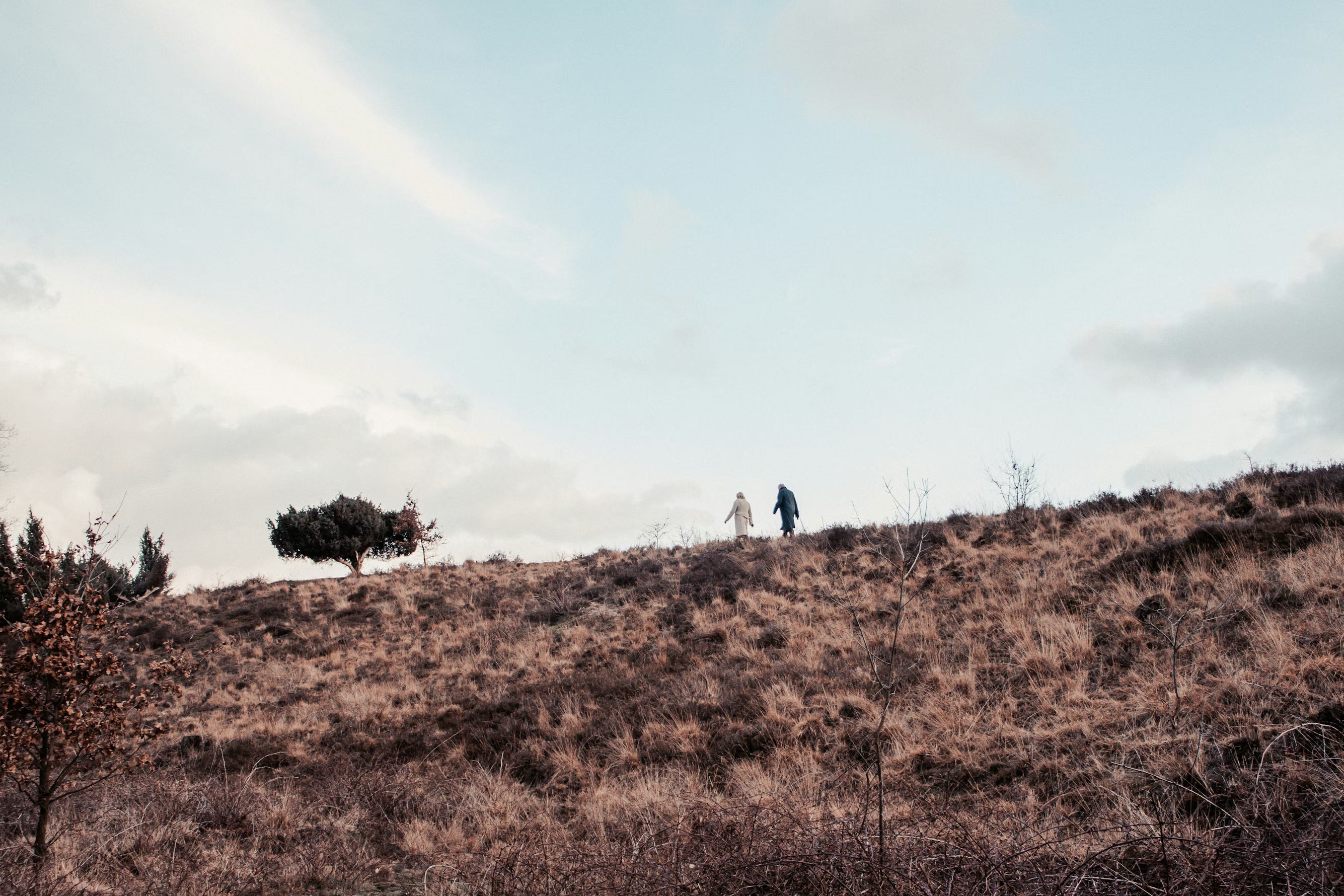
Picture the homes these men came from.
It is 1979. They are in their late seventies and early eighties. They have lived, most of them, in the same houses or apartments for decades. These are not new buildings. They are structures built in the 1930s, 1940s, and 1950s, when the standards governing what was permissible inside the walls of American residential construction were almost nonexistent. Lead paint on every surface. Asbestos in the insulation, the floor tiles, the pipe wrap. Pressed-wood furniture and cabinetry off-gassing formaldehyde continuously into the indoor air. Old plumbing carrying trace heavy metals into the water. And in the basements, in the bathroom grout, behind the wallboard in kitchens where steam condensed for fifty years: mold. The particular, pervasive, immunologically catastrophic mold that colonizes old American housing stock and that, in 1979, virtually no one was measuring or treating or even acknowledging as a health variable.
These men loaded their bags into a van and drove to New Hampshire. They spent a week in a converted monastery surrounded by forest, breathing autumn air laced with compounds their immune systems had not encountered in years. Then they came home.
And for forty years, the story told about what happened during that week has been almost entirely about their minds.
Dr. Ellen Langer, the Harvard psychologist who designed the Counterclockwise Study, built her experiment around the hypothesis that elderly people are constrained not by biology but by self-concept: that if you disrupted their internalized narrative of decline, the body would follow. The results she documented were remarkable: increased grip strength, improved joint flexibility, sharper vision, measurably reduced arthritic inflammation, and photographs that independent observers judged to depict younger men than the before images. The touch football game on the final afternoon became, in the retelling, a symbol of what the mind can do when it stops believing it is old.
The environmental health interpretation of the same data does not dispute the measurements. It disputes the cause. And it begins not in the monastery, but in the houses the men left behind.
What if the experiment’s most important finding wasn’t what the monastery gave these men, but what it temporarily took them away from?
THE INVISIBLE BURDEN: WHAT OLD AMERICAN HOMES DO TO OLD BODIES
The indoor environment of an American home built before 1960 is, by contemporary standards, a substantial toxic exposure. This is not a fringe position. It is the consensus of environmental health science, documented across thousands of peer-reviewed studies and acknowledged by the EPA, the CDC, and every major public health body that has examined the question.
Lead, most visibly. The neurological and cardiovascular effects of chronic low-level lead exposure were not well understood in 1979, but they are now. Lead accumulates in bone over a lifetime and is mobilized back into the bloodstream during aging as bone density declines , meaning an elderly person who was exposed to lead paint in their own home for decades is, in a very literal sense, being slowly poisoned by their own skeleton. Lead disrupts mitochondrial function, elevates systemic inflammation, impairs neuromuscular transmission, and accelerates cardiovascular aging. A study published in JAMA Internal Medicine in 2018 found that blood lead levels in older Americans , even at concentrations well below the levels considered clinically significant , were significantly associated with accelerated biological aging as measured by epigenetic clocks.
Formaldehyde is less discussed but no less consequential. Off-gassing continuously from pressed-wood furniture, particleboard cabinetry, and adhesive materials common in mid-century residential construction, formaldehyde is a potent respiratory irritant and systemic inflammatory trigger. Chronic low-level exposure of the kind produced by sleeping and eating and sitting in the same formaldehyde-emitting environment for twenty or thirty years maintains the body’s inflammatory response in a state of persistent, low-grade activation. This is not acute toxicity. It is something more insidious: a constant background signal telling the immune system that something is wrong, without ever producing a symptom dramatic enough to identify the cause.
And then there is mold. The indoor mycotoxin problem in American housing stock is, according to a growing number of environmental medicine specialists, one of the most underdiagnosed contributors to chronic illness and accelerated aging in older populations. Trichothecene mycotoxins produced by Stachybotrys chartarum , the organism commonly called black mold, prevalent in the damp interiors of aging buildings , are among the most potent biological inflammatory agents identified in any indoor environment. They dysregulate cytokine signaling, suppress natural killer cell function, impair mitochondrial respiration, and produce the particular constellation of symptoms , joint pain, cognitive fog, fatigue, visual disturbance , that characterizes what clinicians now call Chronic Inflammatory Response Syndrome, or CIRS.
“When I look at the symptom profile of the men in Langer’s study, the arthritis, the reduced grip strength, the vision problems, the general physical frailty, I see a clinical picture entirely consistent with chronic mycotoxin exposure,” said Dr. Ritchie Shoemaker, a physician and researcher who has spent more than two decades studying the effects of biotoxin illness in human populations and whose work helped establish the clinical framework for CIRS. “I’m not saying that’s what it was. I’m saying that if you showed me those eight men as patients and told me they all lived in old houses and had been feeling progressively worse for years, mycotoxin exposure would be near the top of my differential. And removing them from those houses for a week would do exactly what Langer described.”
WHAT A WEEK AWAY FROM HOME ACTUALLY DOES TO AN INFLAMED BODY
The immunology here is not complicated, though the popular framing of Langer’s study has never engaged with it. The human inflammatory system is not a fixed state. It is a dynamic response to environmental inputs, and it responds to changes in those inputs relatively quickly. Remove a chronic inflammatory trigger, even briefly, and the body begins to recalibrate. Cytokine profiles shift. C-reactive protein levels fall. The joints, which are among the body’s most sensitive barometers of systemic inflammatory load, begin to decompress.
Seven days. That is how long the men were in New Hampshire. It is long enough to see meaningful inflammatory resolution in someone whose baseline has been chronically elevated by sustained toxic exposure. The arthritic fingers that measurably lengthened as joint swelling subsided are not a mystery if you understand them as the body’s response to the temporary removal of an inflammatory burden. They are what happens when you stop pouring gasoline on a fire.
Dr. Walter Crinnion, a naturopathic physician and researcher who has published extensively on the clinical effects of environmental detoxification, describes the timeline. “The first seventy-two hours away from a chronic exposure source tend to be the most dramatic in terms of measurable inflammatory markers. By day five or six, you can see significant changes in joint mobility, in grip strength, in general energy and cognitive clarity. The visual improvements are interesting. We see those too, because the ciliary muscles and the aqueous dynamics of the eye are sensitive to inflammatory load. When systemic inflammation drops, vision often improves. People think they need new glasses. What they may actually need is to leave their house.”
The men in Langer’s study did leave their houses. For the first time in years, perhaps, their immune systems were not fighting a battle on multiple fronts simultaneously. Their bodies were not processing formaldehyde, mobilizing lead from aging bones, or mounting the low-grade cytokine response that characterizes chronic mycotoxin exposure. They were in the clean, cold air of a New Hampshire forest, eating food prepared in a building with no history of those exposures, sleeping in rooms that were not slowly making them sick.
This is not a small thing. It may, in fact, be the whole thing.
“People think they need new glasses. What they may actually need is to leave their house.”
WHAT THE FOREST WAS ADDING WHILE THE TOXINS WERE ABSENT
The removal of toxic burden is only half the environmental equation. The other half is what the monastery setting was actively providing: a set of biological inputs that urban life had largely stripped from these men’s physiology.
The surrounding New Hampshire forest was, in October, producing a dense aerosol of biogenic volatile organic compounds: primarily the terpene family: alpha-pinene, beta-pinene, limonene, compounds that conifers and deciduous trees emit as a continuous byproduct of their metabolic activity. These phytoncides, as forest medicine researchers call them, are not merely pleasant-smelling background chemistry. They are biologically active agents that, when inhaled, produce measurable and well-characterized changes in human immune function. Qing Li, an immunologist at Nippon Medical School in Tokyo who has conducted the most systematic research into forest bathing physiology, has documented in multiple controlled studies that forest exposure increases the activity and count of natural killer cells, the immune system’s primary anti-cancer and anti-viral defense, and suppresses the production of adrenaline and cortisol. The effect persists for up to a month after the exposure ends.
In men whose NK cell function had been suppressed by years of chronic mycotoxin exposure (mycotoxins are specifically immunosuppressive at the NK cell level), this restoration of immune competence would have had immediate downstream effects on inflammatory regulation. Natural killer cells do not just kill compromised cells. They regulate the broader cytokine environment, sending signals that modulate the entire inflammatory cascade. A week of NK cell restoration, in a body that had been operating with suppressed NK function for years, would look, in the biomarkers Langer collected, exactly like what she saw.
The soil microbiome adds another layer. The forest floor surrounding the monastery harbored the kind of microbial biodiversity that modern urban and suburban environments almost entirely lack. Graham Rook, a professor emeritus of medical microbiology at University College London, has spent decades developing the evidence that chronic inflammatory conditions, from autoimmune disease to the kind of generalized inflammatory aging Langer’s participants exhibited, are substantially driven by the loss of ancestral microbial exposures. The human immune system co-evolved with the organisms in soil and forest air. Deprived of them, it loses its calibration and becomes chronically overactive. Restored to them, even briefly, it begins to settle.
“We are seeing this in clinical practice now with some regularity,” said Dr. Maya Shetreat, a neurologist and herbalist who has written about the intersection of soil microbiology and human health. “Patients with chronic inflammatory conditions who spend sustained time in natural environments , particularly forested ones with rich soil contact , show improvements that we cannot fully explain by any single mechanism. The mycobiome, the bacterial diversity, the phytoncide exposure, the reduction in toxic load: they all operate simultaneously. The body doesn’t experience them separately. It experiences the whole environment at once. And sometimes the whole environment is what it needed.”
THE ELECTROMAGNETIC ARGUMENT
In 1979, the radiofrequency environment of rural New Hampshire was essentially preindustrial. There were no cell towers. The Wi-Fi networks, smart meters, and dense wireless infrastructure that saturate contemporary domestic and urban environments did not exist. The men in the monastery were operating, for a week, in something close to the electromagnetic background that characterized most of human evolutionary history.
The biological significance of this is contested, and it should be stated clearly that the evidence for non-ionizing radiofrequency radiation as a health hazard remains genuinely disputed in the scientific literature. Regulatory agencies in the United States have not established harm thresholds for the exposure levels typical of contemporary environments. A large and serious body of research, however, has documented biological responses to electromagnetic field exposure in cellular and animal models, and a smaller but growing body of human research has raised questions that have not been definitively answered.
What is less contested is the specific mechanism involving the pineal gland. The pineal gland, which synthesizes melatonin in response to darkness and governs the body’s circadian system, is known to be sensitive to magnetic field variations. Multiple studies have documented suppression of melatonin secretion in response to power-frequency electromagnetic field exposure. Melatonin is not simply a sleep hormone: it is one of the body’s most potent endogenous anti-inflammatory and antioxidant molecules. Russel Reiter, a neuroendocrinologist at the University of Texas Health Science Center who has spent four decades studying melatonin’s biological roles, has documented its function as a direct scavenger of hydroxyl radicals, its capacity to upregulate antioxidant enzyme systems, and its inhibitory effects on pro-inflammatory cytokines including TNF-alpha and IL-6. Chronic suppression of melatonin production, by any mechanism, results in elevated oxidative stress, increased inflammatory tone, and accelerated cellular aging.
A week in an electromagnetically quiet rural environment, for men whose pineal glands had been operating in electromagnetic conditions that may have chronically suppressed melatonin output, would have allowed normalized melatonin secretion and overnight repair processes of a depth and quality those bodies had not experienced in years. The downstream effects would be systemic and would include exactly the anti-inflammatory changes Langer’s measurements captured.
This is a hypothesis with incomplete evidence behind it. It is also a hypothesis that, given what we know about melatonin biology, cannot be responsibly dismissed.
THE NOISE PRESCRIPTION
There is one more environmental variable that requires no speculation at all, because the evidence for it is overwhelming: acoustic environment.
Chronic noise exposure, by which environmental health researchers mean the ordinary ambient noise levels of urban and suburban American life in the late twentieth century, is a potent and well-documented driver of inflammatory aging. The mechanism operates primarily through the hypothalamic-pituitary-adrenal axis: sustained noise exposure, even at intensities below conscious discomfort, maintains a low-level activation of the stress response system. Cortisol remains chronically elevated above optimal. The sympathetic nervous system stays partially aroused. Sleep architecture fragments, reducing the depth and duration of slow-wave sleep during which the body performs most of its cellular repair.
A landmark review in The Lancet by Mathias Basner and colleagues documented that noise pollution is, after air pollution, the environmental exposure with the largest quantified burden of disease in developed nations , responsible for a substantial fraction of cardiovascular disease, metabolic dysfunction, and cognitive decline. Elderly populations are disproportionately vulnerable. Their HPA axis regulation is already less robust, their sleep architecture already more fragile, their inflammatory baseline already higher. For an elderly urban resident with decades of accumulated acoustic stress exposure, the effect is not merely inconvenient. It is, in the most literal possible sense, aging them.
The New Hampshire countryside in October 1979 was, by any reasonable measure, among the quietest acoustically characterized environments in the northeastern United States. The men in Langer’s monastery had removed themselves, for seven days, from the primary noise exposure that had been chronically activating their stress response systems for years. Within three to four days of that removal, cortisol diurnal rhythm normalizes measurably. Heart rate variability improves, a sensitive proxy for autonomic nervous system balance and cardiovascular health. Sleep deepens. The overnight repair cascade, allowed to run uninterrupted, begins to address damage that has been accumulating for months or years.
This is not a mysterious process. It is a well-understood one. It simply has never been applied, retrospectively, to the data from a psychology experiment in 1979.
Noise pollution is, after air pollution, the environmental exposure with the largest quantified burden of disease in developed nations. Elderly populations are disproportionately vulnerable. Langer’s men left all of it behind.
WHAT IT MEANS THAT NO ONE ASKED THESE QUESTIONS
The Counterclockwise Study has been in the scientific literature for forty-five years. It has been cited thousands of times. It has shaped popular understanding of aging, mindset, and the plasticity of biological decline. It has generated a substantial research program in the psychology of mindfulness and self-perception. Ellen Langer has been celebrated, rightly, as a creative and important scientist.
And in all of that time, across all of those citations and replications and popular accounts, almost no one has published a serious inquiry into the environmental exposure profile of the setting in which the study was conducted, or the environmental exposure histories of the men who participated in it.
No one has asked what their homes were like. No one has measured the mycotoxin load in the buildings they spent their days in. No one has characterized the indoor air quality of their residences, the lead burden in their blood, the formaldehyde concentrations in their sleeping environments. No one has compared the electromagnetic environment of their neighborhoods to the rural setting of the monastery. No one, in short, has asked whether these men were sick before the experiment began, sick not with aging but with their environments, and whether the monastery worked not by changing their minds but by temporarily extracting them from the sources of their illness.
“The fundamental problem is that environmental medicine and psychology have almost never spoken to each other about the same data,” said Dr. Philip Landrigan, a pediatrician and epidemiologist at Boston College who has spent his career documenting the health effects of environmental toxic exposures. “Psychologists see behavior and cognition. Environmental health researchers see chemical burden and biological response. The Langer study looks completely different depending on which set of eyes you bring to it. What’s frustrating is that the environmental questions are so tractable. We have the tools to answer them. We just haven’t tried.”
The experiment that could settle this question has a straightforward design. Recruit a comparable cohort of elderly individuals. Conduct the full Langer temporal immersion protocol twice: once in the rural monastery setting, and once in an urban setting with equivalent air quality, noise levels, and chemical environment to the participants’ normal residences. Measure, this time, the actual environmental exposures: phytoncide concentrations, microbial biodiversity, indoor air quality, noise levels, electromagnetic field intensity. Measure the biological responses that those exposures produce: NK cell activity, inflammatory cytokine profiles, cortisol diurnal rhythm, melatonin secretion, HRV. If the psychological manipulation is the primary driver, both groups should show similar improvements. If the environment is, the rural group will show effects the urban group does not.
This study does not exist. It should.
THE HOUSES THEY WENT HOME TO
There is one final dimension of this that the psychological interpretation does not address and cannot address, because it has nothing to do with psychology.
The men went home.
They went back to the same houses, the same air, the same slow accumulation of chemical and biological exposures that they had left a week before. And the improvements documented at the end of the monastery week, whatever their cause, did not persist. The follow-up data from the Counterclockwise Study shows that the gains attenuated over subsequent months. The joints stiffened again. The grip strength returned to baseline. The vision reverted.
In the psychological interpretation, this regression is understood as the inevitable reassertion of the self-concept of aging: the men returned to environments that reinforced their old identities, and their bodies followed. This is, again, not an impossible explanation.
But in the environmental interpretation, it is simpler and more stark. They went back to the mold. They went back to the lead and the formaldehyde and the noise and the chemical burden their homes had been generating for decades. The inflammatory cascades that had partially quieted over seven days of forest air and microbial diversity and acoustic quiet resumed their chronic activity. The body responded to its environment, as bodies do, because that is what bodies are designed to do.
The tragedy of the Counterclockwise Study, read this way, is not that the effects were temporary. It is that we spent forty years celebrating the temporary nature of the improvement as a story about the mind, when it may have been a story about housing policy. About toxic building materials. About what we ask elderly Americans to live inside. About the gap between what the human body evolved to inhabit and what it actually inhabits in the last decades of life in contemporary America.
“Aging is partly biological inevitability,” said Dr. Landrigan. “But a significant portion of what we call aging, the inflammation, the joint deterioration, the cognitive decline, the frailty, is environmental disease misclassified as natural decline. We have been treating the normal consequences of toxic exposure as though they were the normal consequences of time. The Langer study, if we read it environmentally, is a brief, accidental window into what these men’s bodies were capable of when you stopped poisoning them. The result was so extraordinary that we invented a psychological explanation for it. Maybe the real explanation is harder to accept, because it implies that we could have done something about it.
The men played touch football. Then they went home. And we told the story as though the football was the point.
Perhaps the point was where they had been standing when they played it.
Selected sources
Shoemaker, R.C. & House, D.E. (2006). Sick building syndrome and exposure to water-damaged buildings: time series study, clinical trial and mechanisms. Neurotoxicology and Teratology, 28(5), 573–588.
Lanphear, B.P. et al. (2018). Low-level lead exposure and mortality in US adults: a population-based cohort study. The Lancet Public Health, 3(4), e177–e184.
Rook, G.A.W. (2013). Regulation of the immune system by biodiversity from the natural environment. Proceedings of the National Academy of Sciences, 110(46), 18360–18367.
Li, Q. et al. (2008). A forest bathing trip increases human natural killer activity and expression of anti-cancer proteins. Journal of Biological Regulators & Homeostatic Agents, 22(1), 45–55.
Li, Q. (2010). Effect of forest bathing trips on human immune function. Environmental Health and Preventive Medicine, 15(1), 9–17.
Basner, M. et al. (2014). Auditory and non-auditory effects of noise on health. The Lancet, 383(9925), 1325–1332.
Reiter, R.J. et al. (2000). Melatonin as an antioxidant: biochemical mechanisms and pathophysiological implications in humans. Acta Biochimica Polonica, 50(4), 1129–1146.
Crinnion, W.J. (2010). Environmental medicine, part one: the human burden of environmental toxins and their common health effects. Alternative Medicine Review, 5(1), 52–63.
Frumkin, H. et al. (2017). Nature contact and human health: a research agenda. Environmental Health Perspectives, 125(7), 075001.
World Health Organization (2011). Burden of Disease from Environmental Noise. WHO Regional Office for Europe.
Landrigan, P.J. et al. (2018). The Lancet Commission on pollution and health. The Lancet, 391(10119), 462–512.
Stanhope, J. & Weinstein, P. (2020). The inverse biodiversity hypothesis and human health. Science of the Total Environment, 742, 140445.
Langer, E.J. (1989). Mindfulness. Addison-Wesley.